How to set up a small entryway for wet shoes and coats
· Editorial team chicagonewsmark.com
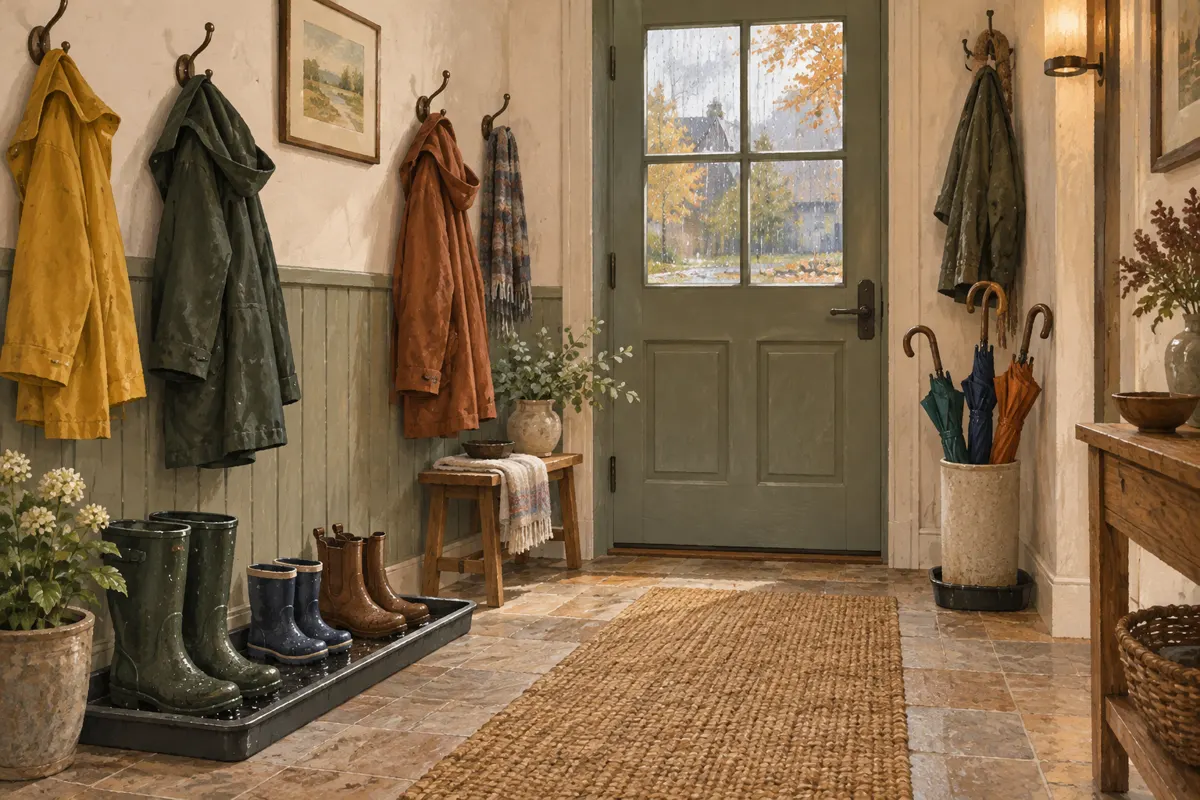
Put a washable shoe tray beside the door, give damp coats separate hooks and reserve a drip-catching spot for umbrellas. Keep the walking path clear and move shoes into their regular storage once they are dry. The editorial setup proposed below gives wet belongings a temporary place without letting them take over a small entryway.
Choose one compact arrival spot
Start by opening the front door fully and checking where you stand to close it, remove shoes and take off a coat. The proposed arrival spot should sit beside that route, with nothing blocking the door or forcing you to step over footwear. Before adding furniture, clear away spare shoes, empty bags and coats you rarely wear.
Small-space storage ideas include using vertical space, unused corners and the area beneath a bench. Choose the option that fits your actual doorway. A bench can provide a seat and shoe storage, but a narrow entry may work better with wall hooks and a tray alone.
- Check the door swing with shoes and coats in their intended positions.
- Leave room to bend down and remove boots.
- Keep access to nearby closets, switches and other doors clear.
- Reserve the entryway for belongings currently in use.
Give wet shoes a washable landing place
For this setup, use a washable tray with a raised edge and enough room for your everyday wet footwear. Check the fit with your largest boots rather than judging an empty tray. Place pairs side by side so they are easy to remove, and choose a tray you can lift and empty without struggling.
Treat the tray as temporary parking. Once shoes are dry, move them to an open rack, cubby or compact cabinet. The supplied storage guides describe these options for keeping shoes organized and limiting floor clutter. Keeping spare pairs elsewhere also leaves space for the next wet arrival.
Avoid placing wet shoes above dry pairs where drips can fall onto them. Follow the footwear’s care instructions for drying; the entryway arrangement simply provides a place to catch water and dirt.
Space coat hooks for the coats you use
The proposed coat area uses individual hooks with enough separation for damp jackets to hang without bunching together. Hold your bulkiest coats against the wall before deciding where hooks should go. Check both their width and where their hems fall, especially if a shoe tray or bench sits underneath.
- Give each regular user an accessible hook.
- Place children’s hooks within their reach.
- Keep bags on a separate hook so they do not crowd damp coats.
- Use fixings suited to the wall and follow the hook manufacturer’s installation and load instructions.
Move dry, less-used outerwear to a closet. If every hook holds several garments, reduce what stays by the door before adding another row.
Set aside a place for damp umbrellas
For umbrellas, the editorial proposal is a stable holder with a removable drip container, placed within easy reach of the door. Check that long umbrellas will not tip it over and that shorter ones can be retrieved easily. Keep it away from coat hems and outside the walking path.
If there is no room for a holder, reserve a corner of the washable tray for a folded umbrella. When space allows, open it to finish drying somewhere it will not obstruct movement, following its care instructions. Put it into enclosed storage after it dries.
Follow a short arrival and cleanup routine
- Leave the damp umbrella in its designated drip-catching spot.
- Remove wet shoes beside the tray and place both shoes inside it.
- Hang the coat on a free hook without piling another garment over it.
- Wipe up water that has reached the floor.
- Later, move dry belongings to their regular storage.
When the tray is empty, remove grit, empty collected water and wash it according to its care instructions. Let it dry before replacing it, and check the floor underneath for moisture. Empty the umbrella container too. Keep a cleaning cloth in a nearby cupboard so this reset is easy to repeat.