How to plan a scavenger hunt for a walk in the park
· Editorial team chicagonewsmark.com
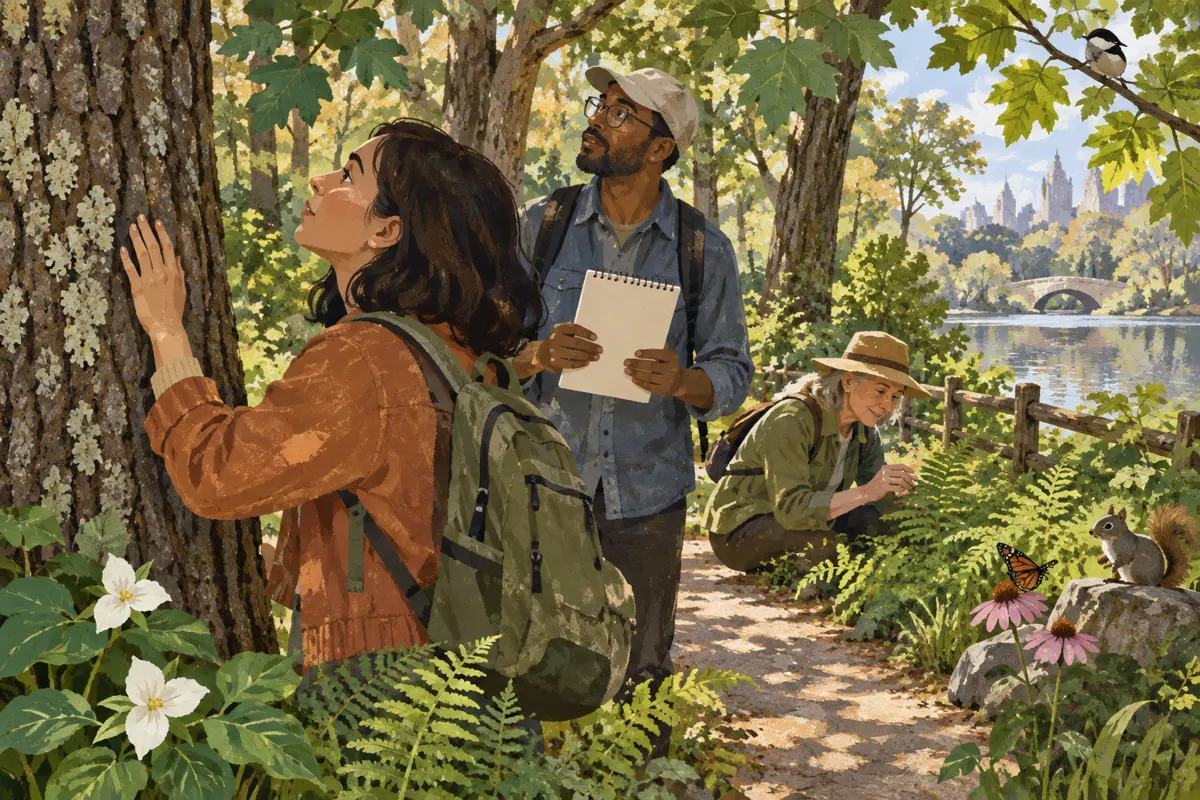
To plan a scavenger hunt for a park walk, choose a manageable route, write a short list of things to notice and agree on how to record each find. Use observations, photos or sketches instead of collecting objects. The proposed format below keeps the game casual: everyone walks at a comfortable pace, clues can be skipped and plants and wildlife stay undisturbed.
Choose a route that suits the group
Start with the walk itself. Choose a familiar path with a clear meeting point and an easy way to shorten the outing. Ask participants about walking distance, surfaces and rest breaks before settling on a route. A hunt should fit the people joining it, including anyone who wants to pause frequently.
Adapt your clues to the setting, as Doing Good Together suggests for nature hunts. In an open park, focus on shadows, trees and sounds. Along a wooded path, use bark patterns, fallen leaves and changes in light. Avoid making a pond, flower bed or particular animal essential to finishing.
- The starting point, finish and approximate time available.
- The paths or area participants will stay within.
- A comfortable pace and places to take breaks.
- What to do if someone wants to finish early.
Write clues that reward noticing
For adults, interesting clues can invite comparison, interpretation and creativity without requiring specialist knowledge. Goosechase includes photography, animal tracks and creative challenges among its nature hunt ideas. For a relaxed walk, translate those themes into observations that can be completed from the path.
Our proposed starter list has eight prompts. Use all of them or choose a smaller selection. Broad descriptions make the list reusable across different parks and seasons.
- Notice two trees with visibly different bark patterns.
- Find a natural shape that resembles a letter or number.
- Spot three shades of the same color.
- Find a shadow with an interesting outline.
- Listen for a natural sound and describe it.
- Notice a sign of animal activity without following or disturbing it.
- Frame a photo or sketch showing two contrasting textures.
- Choose one small detail you might otherwise have walked past.
Avoid clues that depend on naming a species correctly. “A bird making a repeated call” gives more people a way to participate than a request for one specific bird. Include a substitute for harder prompts, such as finding a pattern if no animal activity is visible.
Set simple rules before you start
The proposed rule is simple: noticing counts as finding. Nobody needs to pick a leaf, move a stone or get closer to an animal to prove a discovery. Make this explicit before handing out the clues so the game does not turn into a collection challenge.
- Stay on permitted paths and follow posted park rules.
- Leave plants, fallen objects and wildlife where they are.
- Do not feed, touch, chase or lure animals.
- Skip any clue that requires climbing, entering water or reaching into vegetation.
- Keep paths clear when stopping to look or take photos.
- Ask permission before photographing other people.
For a cooperative game, combine everyone’s discoveries on one list. If the group prefers scoring, our proposal is one point per completed prompt, with no speed bonus. Let participants explain a find when a photo is impractical.
Use a checklist you can reuse
A sheet of paper and a pencil are enough. Put each prompt beside a checkbox and leave room for a few words or a sketch. Doing Good Together suggests keeping observation notes and laminating a list for reuse with dry-erase markers. A phone note is another option if participants prefer it.
- Copy your chosen prompts onto one page or into a shared note.
- Add the meeting point and agreed finish time.
- Read the clues and rules together before walking.
- Mark discoveries during natural pauses.
- Leave unfinished prompts blank and continue at the group’s pace.
Finish by sharing one discovery
At the finish, invite each person to share a favorite detail or the clue that was hardest to complete. These questions also appear in Doing Good Together’s suggested reflections. Keep the conversation brief enough that people can join without giving a formal report.
For your next walk, our proposal is to keep the most enjoyable prompts and replace anything that felt awkward or too specific. Reusing part of the list gives the group a chance to notice how a familiar route looks different on another day.